
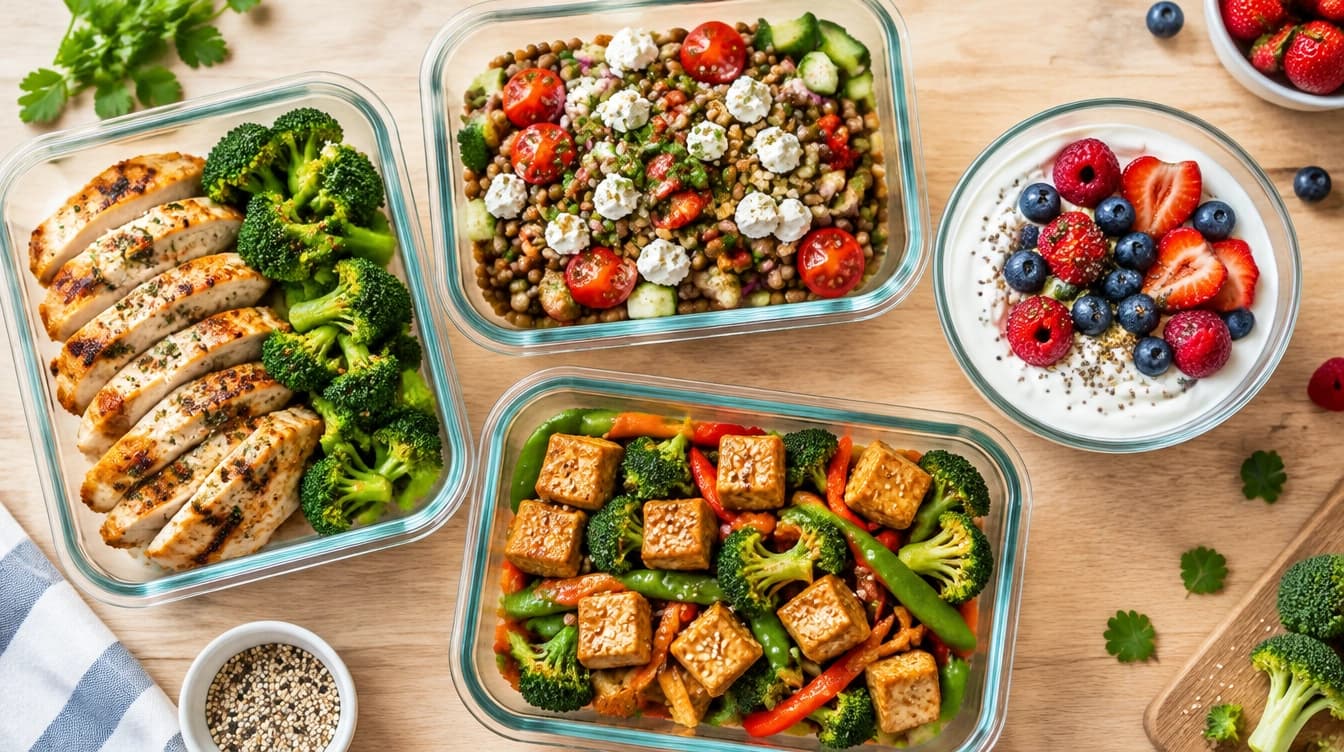
The best high-protein recipes for weight loss combine 25 to 40 grams of protein with roughly 350 to 500 calories per serving, built on lean meat, fish, eggs, dairy, tofu, or legumes plus plenty of vegetables. Protein helps you feel full on fewer calories, which makes a calorie deficit easier to stick with.
This guide covers how much protein most adults aim for, 15 easy protein-rich meals you can cook on a weeknight, and a simple way to plan them so your week stays on track and on budget.
Key takeaways
- Many people choose 25 to 40 g of protein per main meal and 350 to 500 calories, but individual needs vary.
- Protein is the most filling macronutrient, so it helps control hunger while you eat less.
- Build each plate from a protein, a big portion of vegetables, and a smart carb.
- Cheap proteins like eggs, lentils, canned tuna, cottage cheese, and chicken thighs keep costs down.
- Plan a week at a time so protein and calories are decided before you are hungry.
Why does protein help you lose weight?
Protein helps with weight loss in three practical ways:
- It keeps you full. Protein-rich meals tend to feel more satisfying than the same calories from refined carbs or fat, so you are less likely to snack.
- It protects muscle. When you eat less, your body can lose muscle along with fat. Enough protein, combined with some strength training, helps you keep muscle.
- It costs your body more to digest. Digesting protein burns more energy than digesting fat or carbs. The effect is modest, but it adds up.
Weight loss still comes down to eating slightly fewer calories than you burn. Protein simply makes that deficit easier to live with.
How much protein do you need to lose weight?
Some research suggests 1.2 to 1.6 grams of protein per kilogram of body weight per day may help preserve lean mass during weight loss, but this is higher than the adult RDA and individual needs vary. For a 70 kg (154 lb) person, that is roughly 85 to 110 grams a day.
A simple way to hit that number is to split it across meals:
| Meal | Protein target |
|---|---|
| Breakfast | 20 to 30 g |
| Lunch | 25 to 40 g |
| Dinner | 25 to 40 g |
| Snack | 10 to 20 g |
This is general information, not medical advice. If you have kidney disease, are pregnant, or manage a health condition, check your protein target with your doctor or a registered dietitian.
What are the best protein sources for weight loss?
These are examples of protein-rich foods that can fit into a calorie-conscious diet. Values are approximate.
| Food | Typical serving | Protein | Calories |
|---|---|---|---|
| Chicken breast, cooked | 100 g (3.5 oz) | 31 g | 165 |
| Canned tuna in water | 1 can (about 140 g) | 25 to 30 g | 120 to 140 |
| Plain Greek yogurt, 0% | 3/4 cup (175 g) | 15 to 17 g | 100 |
| Cottage cheese, low-fat | 1/2 cup (113 g) | 12 to 14 g | 90 |
| Eggs | 2 large | 12 g | 140 |
| Firm tofu | 150 g | 12 to 20 g | 120 to 170 |
| Lentils, cooked | 1 cup (200 g) | 18 g | 230 |
| Shrimp, cooked | 100 g | 24 g | 100 |
Eggs, lentils, and canned tuna are some of the cheapest protein per gram, which matters if you are also watching your grocery bill.
15 high-protein recipes for weight loss
Each idea below is built around 20 to 40 g of protein per serving. Exact numbers vary with portions and brands.
High-protein breakfasts
- Veggie egg scramble with cottage cheese. Whisk eggs with a spoonful of cottage cheese, then fold in spinach and peppers. About 25 to 30 g protein.
- Greek yogurt parfait. Plain 0% Greek yogurt, berries, and a small handful of oats or nuts. About 20 g protein.
- Overnight protein oats. Oats, milk, Greek yogurt, and chia, ready in the fridge. About 22 to 28 g protein.
High-protein lunches
- Tuna and white bean salad. Canned tuna, white beans, cucumber, lemon, and olive oil. About 35 g protein.
- Chicken and quinoa power bowl. Sliced chicken breast, quinoa, roasted vegetables, and a yogurt-herb sauce. About 38 g protein.
- Lentil and feta salad. Cooked lentils, cucumber, tomato, parsley, and a little feta. About 22 to 26 g protein.
- Turkey lettuce wraps. Lean ground turkey with ginger and garlic, served in crisp lettuce cups. About 30 g protein.
High-protein dinners
- Sheet-pan chicken thighs with broccoli. One tray, little cleanup, and thighs are often cheaper than breasts. About 32 g protein.
- Garlic shrimp zucchini noodles. Quick sauteed shrimp over zucchini noodles. About 28 g protein.
- Chicken and chickpea curry. Lean chicken, chickpeas, tomatoes, and spices served with a small scoop of rice. About 38 g protein.
- Baked salmon with asparagus. Omega-3 rich and ready in 20 minutes. About 34 g protein.
- Turkey chili with beans. A big pot that portions well for the week. About 35 g protein.
- Tofu and vegetable stir-fry. Firm tofu, mixed vegetables, and a light soy-ginger sauce. About 24 to 28 g protein.
- Lean beef and pepper skillet. Flank steak strips with peppers and onions. About 36 g protein.
High-protein light meals
- Cottage cheese and tomato bowl. A full 1 cup serving of low-fat cottage cheese with tomato and everything seasoning. Quick, savoury, and about 24 to 28 g protein.
Vegetarian? Swap in tofu, eggs, lentils, beans, and Greek yogurt. Vegan? Use tofu, tempeh, lentils, chickpeas, and soy yogurt.
How do you build a high-protein, low-calorie plate?
Use this simple formula for any meal:
- Protein (about a palm to two palms): chicken, fish, eggs, tofu, lean beef, or legumes.
- Vegetables (half the plate): broccoli, spinach, peppers, zucchini, or a big salad. They add volume and fibre for very few calories.
- Smart carbs (a fist): quinoa, brown rice, potatoes, or beans.
- Healthy fat (a thumb): olive oil, avocado, nuts, or seeds.
- Flavour for free: garlic, lemon, herbs, spices, and hot sauce.
How do you meal plan high-protein recipes for weight loss?
Planning is what turns good intentions into results. Here is a simple routine:
- Pick a daily protein and calorie goal. For example, 100 g of protein and 1,600 to 1,800 calories.
- Choose 4 to 5 dinners and 2 lunches. Cook once and eat leftovers to cover the rest.
- Check protein and calories per serving. Do not guess. Look at the numbers before you commit.
- Build one grocery list. Combine every ingredient so you only buy what you need.
- Prep on one day. Cook proteins, wash vegetables, and portion containers.
NoshUp does the heavy lifting here. You can filter more than 1,200 recipes by protein per serving, set a weekly protein goal and a calorie limit per serving, and send your meals to one grocery list. Read the step-by-step guides on filtering high-protein recipes and high-protein meal planning, and see how NoshUp calculates recipe calories.
How can you eat high-protein on a budget?
High-protein eating does not have to be expensive.
- Buy the cheap proteins first: eggs, lentils, canned beans, canned tuna, and cottage cheese.
- Choose chicken thighs or whole chickens when they are cheaper than breasts.
- Buy frozen fish and shrimp. They are often cheaper than fresh and keep for months.
- Plan around flyer deals. NoshUp matches your planned meals to weekly grocery flyer sales. Learn how in Plan your week around grocery flyer deals.
- Batch cook. Chili, curry, and sheet-pan meals make several servings for the price of one.
Frequently asked questions
How much protein should I eat per day to lose weight?
For weight loss, research often suggests about 1.2 to 1.6 g of protein per kg of body weight per day (roughly 0.55 to 0.7 g per lb), which is higher than the standard adult RDA. A 70 kg person would target about 85 to 110 g. Individual needs vary, so talk to a doctor or dietitian, especially if you have a medical condition.
Can you lose weight by eating only high-protein foods?
No. A balanced plate with vegetables, fibre, and healthy fats is healthier and easier to maintain. Protein works best as part of an overall calorie deficit, not as the only thing you eat.
What are the best high-protein foods for weight loss?
Chicken breast, turkey, fish, shrimp, eggs, Greek yogurt, cottage cheese, tofu, tempeh, lentils, and beans give plenty of protein for relatively few calories.
What is a good high-protein breakfast for weight loss?
An egg scramble with vegetables, a Greek yogurt parfait, or protein oats each provide roughly 20 to 30 g of protein and keep you full until lunch.
Are high-protein vegetarian recipes good for weight loss?
Yes. Eggs, dairy, tofu, tempeh, lentils, and beans all supply protein. Pair them with vegetables and whole grains for filling, lower-calorie meals.
How many calories should a high-protein weight-loss meal have?
Many people aim for about 350 to 500 calories per main meal, with 25 to 40 g of protein. Your own target depends on your size, activity, and goals.
Does protein really keep you full?
Yes. Research consistently shows protein is the most satiating macronutrient, which is why higher-protein meals can help reduce snacking.
Start planning high-protein meals that fit your goals
Losing weight is easier when dinner is already decided. With NoshUp you can filter recipes by protein, cap calories per serving, and turn your week into one grocery list that highlights flyer deals.
Browse high-protein recipes in NoshUp and plan your week today.
This article is for general information only and is not medical advice. Check with a healthcare professional before making major changes to your diet.